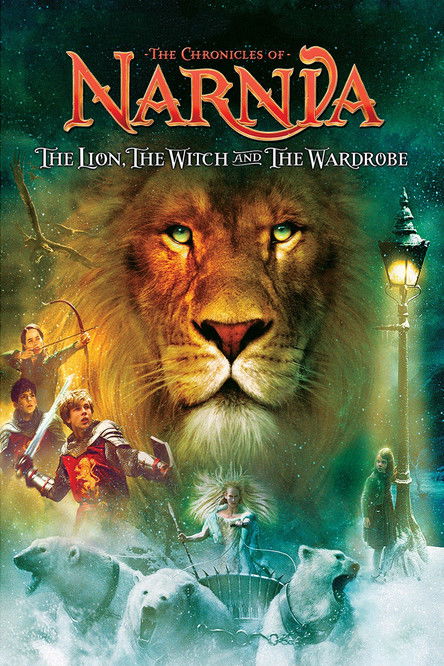
The Chronicles of Narnia: The Lion, the Witch and the Wardrobe
Threshold Analysis
Concerns
- Battle violence may be too intense for very young children (under 6-7)
- Aslan's death scene is emotionally intense — binding, mocking, shaving, and stabbing on the Stone Table
- The White Witch's magic and the enchanted Turkish Delight could be mildly scary for sensitive children
- Families with strict convictions against all fantasy/magical content should use their own discernment, though the magic here serves Christian allegory
Positives
- One of cinema's clearest allegories for Christ's substitutionary atonement and resurrection
- Edmund's arc powerfully illustrates sin, repentance, and the free gift of forgiveness
- Strong family loyalty — the siblings learn to protect and forgive each other
- Courage, duty, sacrifice, and obedience to rightful authority are celebrated
- Childlike faith (Lucy) is shown as a virtue, not naivety
- Evil is portrayed as genuinely evil with real consequences — never glamorized
- The seductive nature of temptation (Turkish Delight) is an excellent teaching tool for families
- Written by C.S. Lewis, one of Christianity's greatest modern apologists, as an intentional vehicle for Gospel truth
Content Flags
The film includes a large-scale battle sequence with swords, spears, and mythical creatures fighting. Characters are struck, knocked down, and some are shown dying (though with minimal blood). The White Witch kills Aslan on the Stone Table in a scene that is emotionally intense — he is bound, muzzled, mocked, shaved, and stabbed, clearly paralleling the Passion of Christ. Edmund is stabbed by the Witch during battle. Wolves attack characters in multiple scenes. A fox is threatened. Mr. Tumnus is turned to stone. The violence is purposeful and has real weight and consequences, but younger children (under 7-8) may find the battle and Aslan's death genuinely frightening.
The White Witch uses dark magic — she turns creatures to stone with her wand and creates enchanted Turkish Delight to tempt Edmund. She invokes 'Deep Magic' and ancient laws. However, this is firmly within C.S. Lewis's Christian allegorical framework where the Witch represents Satan/evil, and her power is explicitly lesser than and subject to the 'Deeper Magic' (representing God's sovereign grace and the power of sacrificial love). Aslan himself is a Christ figure, not an occult figure. The magical world of Narnia functions as allegory, not as an endorsement of occultism. Father Christmas (Santa Claus) appears and gives the children weapons and gifts.
Edmund is tempted and essentially enchanted by magical Turkish Delight, which functions like an addictive substance — he craves it and betrays his family to get more. This is a useful allegory for the nature of temptation and sin. Mrs. Beaver serves tea. Lucy uses a healing cordial given by Father Christmas.
Exceptional. This is one of the finest Christian allegories ever adapted to film. Aslan's voluntary sacrificial death in Edmund's place directly parallels Christ's atonement — the innocent dying for the guilty. His resurrection embodies Easter hope. Edmund's arc is a story of sin, betrayal, repentance, and complete forgiveness/restoration. Peter learns courage and self-sacrificial leadership. Lucy models childlike faith and trust. Susan represents the struggle of doubt. The film teaches that evil is real and seductive (the Turkish Delight), that betrayal has devastating consequences, that redemption costs something, that forgiveness is freely given, and that love conquers death. Family loyalty, duty, courage, humility, and obedience to rightful authority are all central.
Overview
Siblings Lucy, Edmund, Susan and Peter step through a magical wardrobe and find the land of Narnia. There, they discover a charming, once peaceful kingdom that has been plunged into eternal winter by the evil White Witch, Jadis. Aided by the wise and magnificent lion, Aslan, the children lead Narnia into a spectacular, climactic battle to be free of the Witch's glacial powers forever.