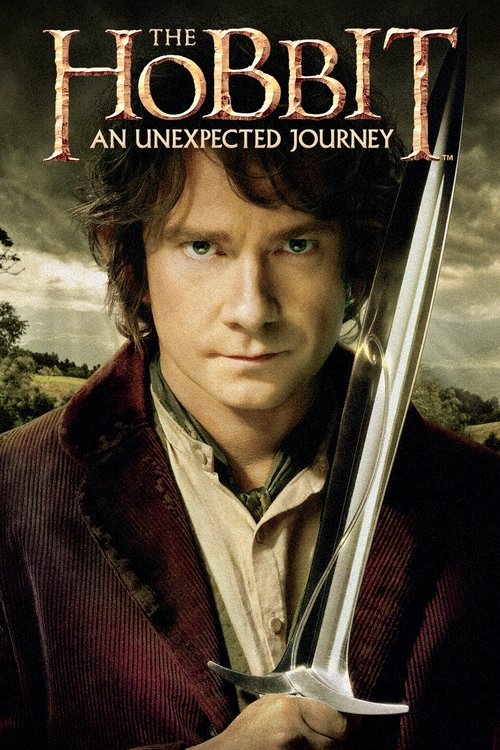
The Hobbit: An Unexpected Journey
Threshold Analysis
Concerns
- Extended, sustained fantasy violence including beheadings, stabbing, and combat far beyond the tone of Tolkien's original children's book
- Magic and wizardry are central to the story — Gandalf, Radagast, Galadriel, and the Necromancer all wield supernatural power outside of any explicitly Biblical framework
- The Ring's corrupting influence is portrayed with an almost spiritual seductiveness that younger viewers may not fully process
- The Necromancer/dark sorcery subplot introduces themes of raising the dead and dark spiritual forces
- Nearly 3-hour runtime with intense sequences may be overwhelming for younger or sensitive children
Positives
- Mercy is the film's central moral lesson — Bilbo spares Gollum's life out of pity, which Gandalf affirms as the highest form of courage
- Providence is a strong undercurrent — Gandalf's choice of Bilbo echoes God's pattern of choosing the small and humble for great purposes (1 Samuel 16:7, 1 Corinthians 1:27)
- Sacrificial courage — Bilbo risks his life to save Thorin, choosing others over his own comfort and safety
- The corrupting nature of power (the Ring, Thorin's obsession with Erebor) serves as a cautionary theme consistent with Biblical warnings about greed and idolatry
- Strong themes of loyalty, fellowship, perseverance, and the value of home and community
- Evil is clearly portrayed as evil — darkness, corruption, and cruelty are never glamorized or presented as attractive
- Rooted in the work of a deeply Christian author whose sub-creation was explicitly informed by Catholic theology
Content Flags
Very minimal. A few scattered uses of mild insults and name-calling ('confusticate and bebother,' 'blundering'). No modern profanity, no uses of 'damn,' 'hell,' or any stronger words. The dialogue is period-appropriate and largely clean.
Extensive fantasy battle violence throughout. The prologue depicts a large-scale battle between dwarves and orcs with sword fighting and bodies falling. Goblins and orcs are beheaded, slashed, and stabbed throughout multiple action sequences. The Great Goblin is sliced open (his large body falls on the dwarves). Azog the Defiler is shown severing Thror's head (shown briefly from a distance). Trolls threaten to eat the dwarves, placing some on a spit to roast. Wargs (giant wolves) attack the company. Radagast discovers a fortress full of dark sorcery and encounters a ghostly Witch-king figure. The Goblin tunnels sequence involves massive, extended combat with many goblins killed. Gollum bashes a goblin's head with a rock (partly shown). While most violence is fantasy-styled and not excessively gory, there is green/black orc blood, severed limbs, and sustained peril throughout the nearly 3-hour runtime.
Gandalf is a wizard who uses a magical staff for light, force blasts, and combat. He is presented as a wise, benevolent guide — essentially an angelic figure in Tolkien's mythology. Radagast the Brown uses nature-based magic and encounters a Necromancer raising the dead at Dol Guldur. The Necromancer (later revealed as Sauron) represents a dark, evil spiritual force. Galadriel, Elrond, and Saruman are shown with implied supernatural wisdom/power. A 'Morgul blade' — a weapon of dark sorcery — is discovered. The One Ring, a corrupting object of dark power, is found by Bilbo; its influence is shown as sinister and seductive. Tolkien's magic system is rooted in his Catholic worldview where magic is tied to the nature of beings (angelic Maiar vs. corrupted evil), but the film does not explain this theological framework, so viewers unfamiliar with Tolkien may simply see standard fantasy magic.
The dwarves drink ale at Bilbo's house during the party scene (played for comedy). Gandalf smokes a pipe (pipe-weed/tobacco). These are brief and incidental.
Strong themes of courage, loyalty, friendship, mercy, self-sacrifice, and finding strength beyond physical power. Gandalf explicitly states he chose Bilbo not for his strength but for his courage and goodness. The most pivotal scene — Bilbo sparing Gollum's life out of pity rather than killing him — is a profound illustration of mercy, echoing Gandalf's earlier words: 'True courage is not about knowing when to take a life, but when to spare one.' Thorin's pride and desire for reclaimed glory are shown as both motivating and potentially dangerous. The company's loyalty to one another and willingness to face death together models sacrificial brotherhood. Bilbo's growth from comfort-seeking to courageous self-giving mirrors themes of Christian discipleship — leaving the safe and comfortable to answer a higher calling.
Overview
Bilbo Baggins, a hobbit enjoying his quiet life, is swept into an epic quest by Gandalf the Grey and thirteen dwarves who seek to reclaim their mountain home from Smaug, the dragon.