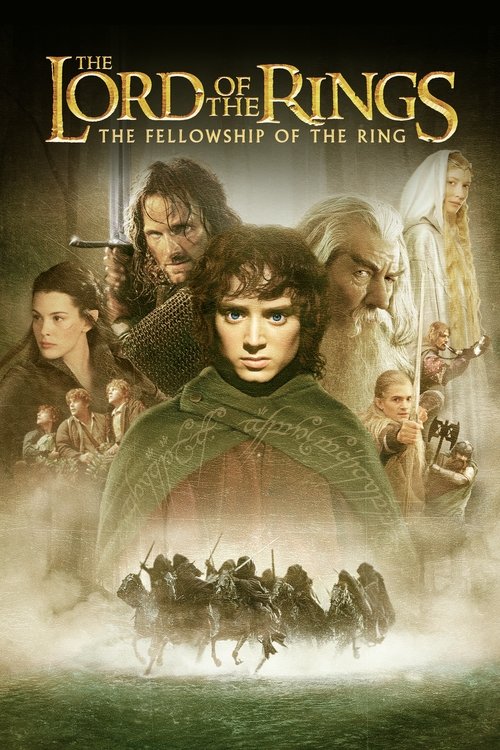
The Lord of the Rings: The Fellowship of the Ring
Threshold Analysis
Concerns
- Frequent and sometimes intense battle violence including stabbings, beheadings, and a major character's death by multiple arrows — not suitable for young or sensitive children
- Frightening imagery: Ringwraiths, orcs, the Balrog, and Galadriel's terrifying transformation scene when tempted by the Ring
- Fantasy magic is present throughout — wizards, a powerful ring, elven supernatural abilities — which some families may object to on principle
- The emotional weight of the story (Gandalf's apparent death, the breaking of the Fellowship, Boromir's death) can be intense for younger viewers
- Casual depiction of pipe-smoking and ale-drinking by sympathetic characters
Positives
- One of the most profoundly Christian-influenced stories in modern cinema, rooted in Tolkien's Catholic faith
- The Ring serves as a powerful metaphor for sin and temptation — it corrupts all who use it and cannot be wielded for good
- Self-sacrifice is the highest virtue: Gandalf, Frodo, Aragorn, and Boromir all lay down their comfort or lives for others
- Humility is honored — the weak and small are chosen to carry the greatest burden (echoes 1 Corinthians 1:27)
- Mercy is shown to be essential — Frodo's pity for Gollum is presented as the morally right choice over vengeance
- Boromir's repentance and death scene is a powerful picture of confession, forgiveness, and redemption
- Providence and a guiding higher purpose are explicitly acknowledged by Gandalf
- Sam's loyalty to Frodo is one of cinema's greatest portrayals of faithful, covenantal friendship
- Evil is portrayed as real, seductive, and destructive — never glamorized or presented as morally equivalent to good
- No sexual content, no blasphemy, no LGBT content, and virtually no profanity — remarkably clean for a major blockbuster
Content Flags
Very minimal. A few uses of 'damn' and 'hell' (used mostly in context — e.g., referring to actual hellish places or damnation). Occasional mild insults like 'fool.' No strong profanity whatsoever. This is one of the cleanest major blockbusters in terms of language.
This is the primary content concern. Extended battle sequences at Weathertop, Moria (cave troll fight, Balrog confrontation), and Amon Hen. Orcs and Uruk-hai are stabbed, slashed, and beheaded — green/black blood is shown. Boromir is pierced by multiple arrows and dies on screen (emotional, not gratuitous). The Ringwraith stabs Frodo at Weathertop. Gandalf battles the Balrog and falls into the abyss. Prologue shows massive warfare with thousands dying. Violence is consequential and sobering rather than glorified, but it is frequent and sometimes intense — limbs are severed, heads roll. Young or sensitive children will find much of this frightening, particularly the Ringwraiths, orcs, and the cave troll sequence.
This requires nuanced discussion. The film features wizards (Gandalf, Saruman), a magic ring of power, an elven queen with supernatural abilities (Galadriel), and dark sorcery. However, Tolkien was a devout Catholic, and the source material is deeply informed by Christian theology. Magic in Middle-earth functions more as an angelic or demonic spiritual authority than as occult practice. The Ring itself is essentially a metaphor for sin and temptation — it corrupts everyone who uses it, and it cannot be wielded for good. Gandalf and Galadriel both refuse the Ring because they know its power would corrupt them. Saruman's fall mirrors Luciferian pride. The 'magic' is not presented as something humans practice or can learn — it belongs to created spiritual beings (Maiar, Elves). There is no spell-casting, séances, divination, or witchcraft in the occult sense. Still, parents who draw a firm line on any fantasy magic should be aware of its presence.
Hobbits drink ale and smoke pipe-weed (presented as tobacco, not marijuana, though the name causes occasional confusion). Drinking is shown casually at the Prancing Pony inn. Gandalf and Bilbo smoke pipes together. None of this is excessive or presented as harmful behavior, but it is present.
Extraordinarily strong. The film is built on deeply Christian themes even without being explicitly Christian. Self-sacrifice: Gandalf gives his life to save the Fellowship ('Fly, you fools!'). Frodo voluntarily bears the burden of the Ring knowing it may destroy him — a Christ-like willingness to suffer for others. Friendship and loyalty: Sam's faithfulness to Frodo is one of the most moving depictions of loyal friendship in cinema. Humility: The great powers of Middle-earth (Gandalf, Galadriel, Aragorn) all recognize that the smallest and weakest — a hobbit — must carry the burden. This echoes 1 Corinthians 1:27. Resisting temptation: Multiple characters are tempted by the Ring and must choose to reject it. The consequences of giving in to temptation (Boromir's fall and repentance, Gollum's slavery to the Ring) are shown clearly. Providence: Gandalf speaks of a guiding purpose — 'Bilbo was meant to find the Ring... and that is an encouraging thought.' Mercy: Frodo's decision not to kill Gollum, following Gandalf's counsel that even the wretched deserve pity, becomes a pivotal moral choice. Repentance: Boromir's death scene is essentially a confession and absolution — he repents of his betrayal and dies defending the hobbits. Good vs. evil is presented as absolute, not relative.
Overview
Young hobbit Frodo Baggins, after inheriting a mysterious ring from his uncle Bilbo, must leave his home in order to keep it from falling into the hands of its evil creator. Along the way, a fellowship is formed to protect the ringbearer and make sure that the ring arrives at its final destination: Mt. Doom, the only place where it can be destroyed.